
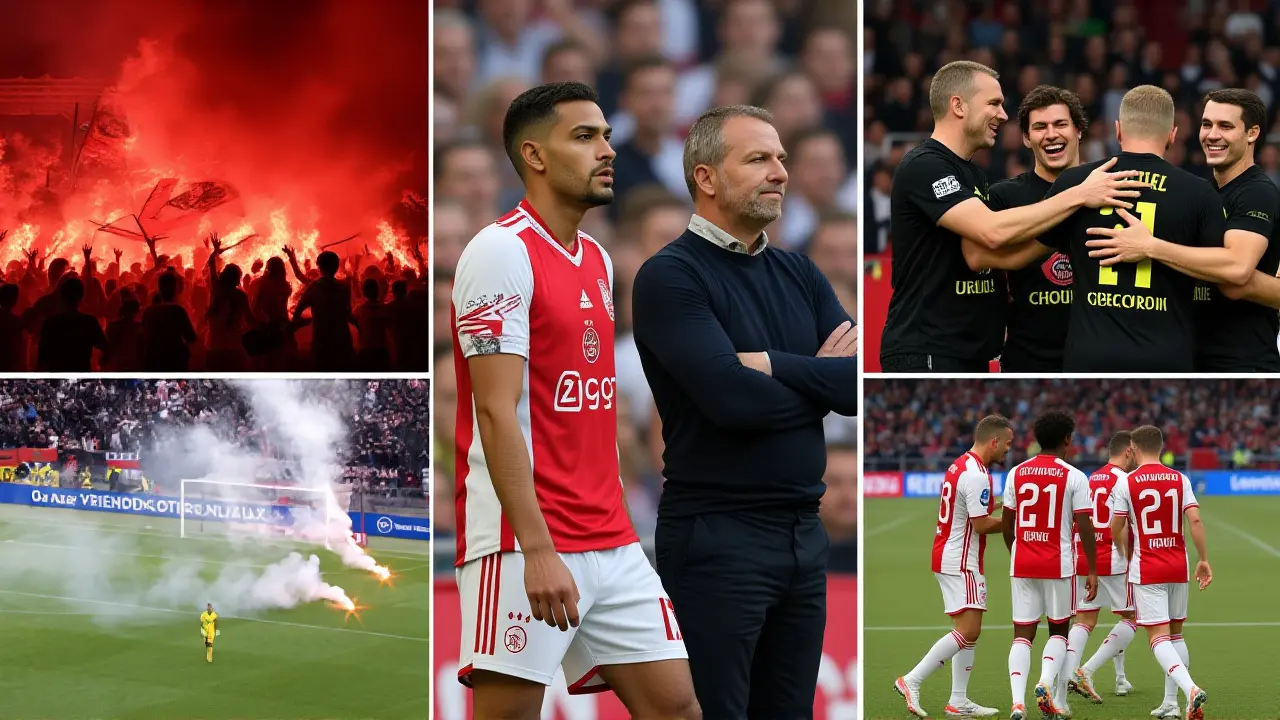
On a cold Sunday evening in Amsterdam, Ajax Amsterdam silenced their fiercest rivals with a 2-0 win in the 200th De Klassieker — but the triumph was overshadowed by the haunting echoes of fan violence that forced the Johan Cruyff ArenA to operate with four blocks shuttered. The match, played on December 14, 2025, was more than a derby. It was a reckoning.
Derby Under Shadow
The atmosphere inside the stadium was tense, not electric. Empty seats loomed where the F-Side — Ajax’s most notorious hooligan faction — once roared. Their ban, imposed after they ignited flares and fireworks during the abandoned match against FC Groningen, was the latest in a string of disciplinary actions. Manager Fred Grim didn’t mince words: "We can’t let a few ruin it for thousands who love this club." The Dutch Football Association (KNVB) had warned: repeat offenses could mean full stadium closures or point deductions. This time, they chose partial lockdown.The Match: Precision Over Passion
Feyenoord Rotterdam, under the watchful eye of Robin van Persie, arrived in crisis. Seven losses in ten games. Confidence shattered. Their attack, once lethal with Ayase Ueda leading the line, looked disjointed. Ajax, meanwhile, had won three straight derbies — a first in decades — and were riding a four-game winning streak in all competitions. The breakthrough came in the 57th minute. Mika Godts, the 19-year-old winger with the icy composure of a veteran, cut inside from the left and unleashed a curler that kissed the post before nestling into the net. Feyenoord’s defense, already frayed, didn’t recover. Five minutes later, substitute Kian Fitz-Jim — who had earlier missed a golden chance — made amends. A slick one-two with Oscar Gloukh left him with a simple finish. 2-0. Feyenoord’s best chance came when Ueda headed a corner wide in stoppage time. Van Persie, arms crossed, stared into the empty stands. His son, Shaqueel van Persie, made his Eredivisie debut as a late sub — a moment that drew murmurs from the crowd. "He looks like his dad," one fan whispered. "But he doesn’t have the same fire. Not yet."A History of Chaos
The De Klassieker has always been more than football. It’s identity. It’s pride. And too often, it’s violence. On September 24, 2023, Ajax fans hurled flares onto the pitch while Feyenoord led 3-0. The game was halted. Restarted behind closed doors three days later. Feyenoord won 4-0. In April 2024, they delivered their heaviest blow: a 6-0 thrashing — Ajax’s worst league defeat ever. Then came the September 1, 2024, match, canceled because of a police strike. And now, this: another abandonment, another ban. The KNVB’s patience is wearing thin. In 2023, they introduced a three-strike policy: first offense — fine. Second — partial closure. Third — full closure and points deduction. Ajax’s F-Side hit their second strike with the Groningen incident. The message was clear: enough.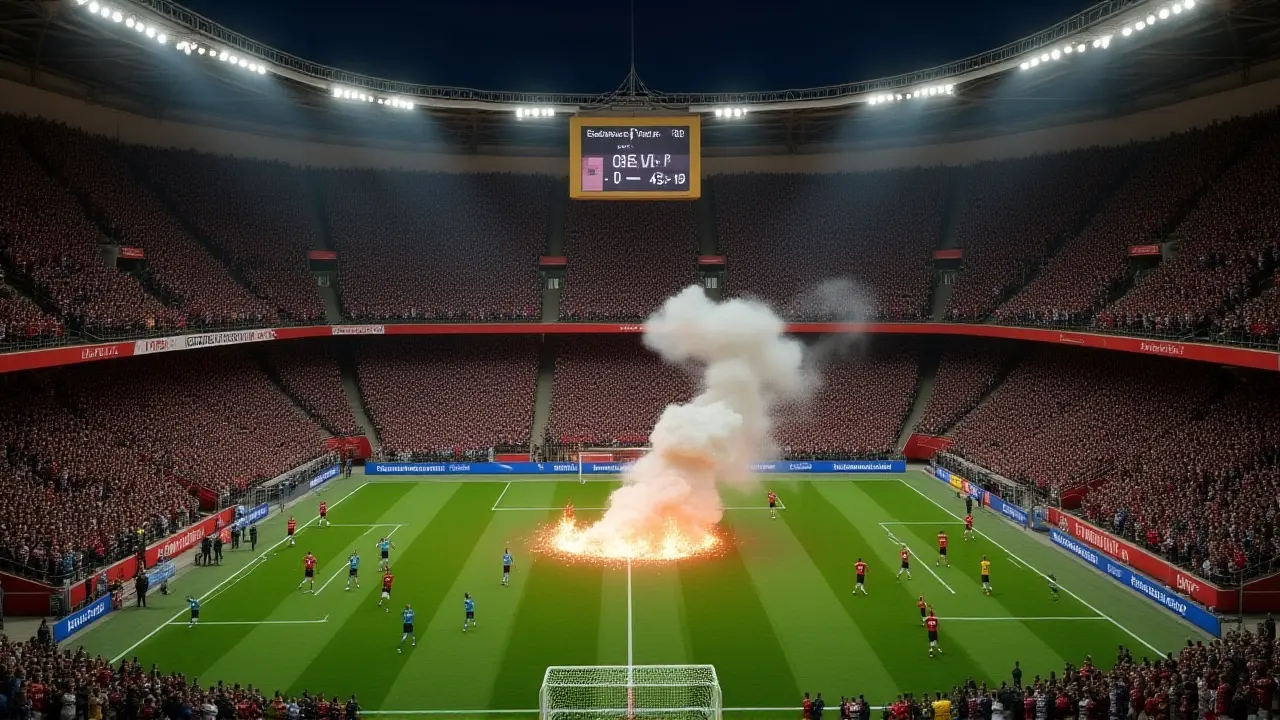
Standings and the Road Ahead
The result pushed Ajax to 29 points (8-5-3), closing the gap on Feyenoord to just five points. But the real story remains at the top: PSV Eindhoven sits comfortably at 43 points, with a +30 goal difference. The title race feels distant for both Ajax and Feyenoord. The next De Klassieker — the 201st — is set for March 21, 2026 at De Kuip, Feyenoord’s home. Will the F-Side still be banned? Will the KNVB escalate sanctions? Will fans return, or will the derby become a ghost of itself?What’s Next?
The KNVB is expected to announce new fan-monitoring protocols by mid-January, possibly including facial recognition at stadiums and mandatory fan education programs. Ajax’s board is reportedly considering a permanent separation from the F-Side — a move that could cost them up to 15% of their matchday revenue. Meanwhile, van Persie’s team faces a brutal stretch: five away games in six weeks. Ajax, buoyed by their derby win, must now chase PSV — but they can’t afford another distraction. Not after this.Frequently Asked Questions
Why was the Johan Cruyff ArenA partially closed during the match?
The stadium closed four blocks after Ajax’s F-Side hooligan group triggered the abandonment of the match against FC Groningen by igniting fireworks behind a goal. This was Ajax’s second major fan-related offense within a year, triggering the KNVB’s two-strike penalty: partial stadium closure. The move was intended to isolate troublemakers while allowing law-abiding fans to attend.
How did the fan disturbances affect Ajax’s league position?
While the 2-0 win improved Ajax’s record to 8-5-3 (29 points), the fallout from fan violence has created off-field instability. Potential fines, loss of matchday revenue, and the risk of future point deductions if more incidents occur could undermine their title push. PSV’s 43-point lead remains daunting, but Ajax’s momentum is real — if they can keep the chaos outside the pitch.
What’s the significance of Robin van Persie’s son playing in this match?
Shaqueel van Persie’s Eredivisie debut was symbolic. At 18, he resembles his father in build and movement, sparking comparisons. But while Robin was a clinical finisher with ice in his veins, Shaqueel is still finding his rhythm. His appearance signaled Feyenoord’s long-term planning — but also highlighted the generational gap in their current squad.
How does this match compare to past De Klassieker incidents?
Unlike the 2023 flare-throwing incident that led to a suspended game, this match was completed — but under heavy security and with half the usual crowd. The 2024 6-0 Feyenoord win was a sporting humiliation; this was a moral one. The 200th meeting was meant to be celebratory. Instead, it underscored how deep the rot runs — and how fragile the sport’s reputation has become.
What are the consequences if Ajax fans cause another disturbance?
Under KNVB’s three-strike policy, a third offense triggers automatic stadium closure for the next home match and a three-point deduction in the league. Ajax’s board is now weighing whether to permanently disassociate from the F-Side — a move that could cost them €10–15 million in annual matchday income, but might save their reputation and avoid relegation-level sanctions.
Is the De Klassieker still meaningful without its fans?
Not as it was. The rivalry’s soul is in the noise, the chants, the tension. A silent derby feels hollow. But if the violence continues, the alternative is worse: a derby played in an empty stadium, broadcast to a world that no longer sees football as a celebration — but as a liability. The players still care. The question is whether the clubs, and the fans who love them, still do.


Sarah Day
Honestly, it’s wild how the game itself was so clean but the drama was all outside the pitch. I’ve been to a few derbies in person, and the silence in those stands? Chilling. It’s like watching a funeral for something that used to be alive.
Hope they figure out a way to keep the passion without the violence. The kids who just want to cheer shouldn’t pay for the sins of a few.
Also, Mika Godts? That goal was pure ice. 19 and already playing like he’s got nothing to prove. Love that kid.