
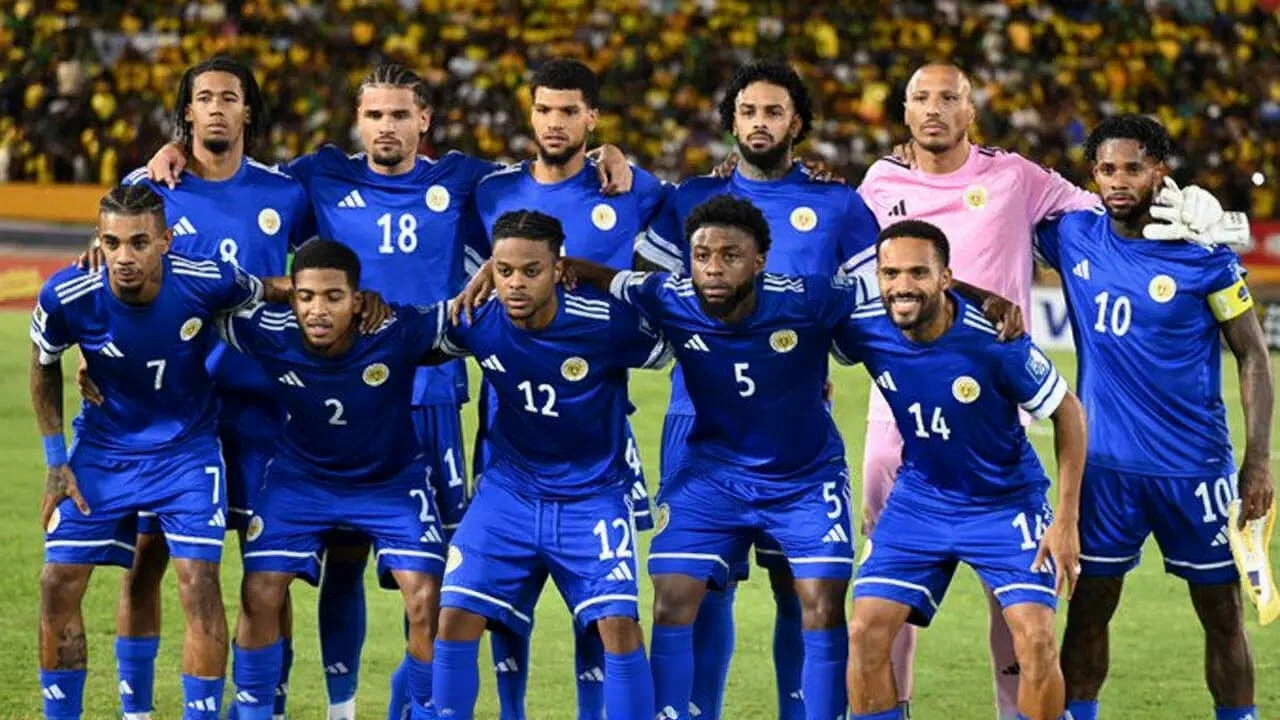
When the final whistle blew at Kingston’s National Stadium on November 19, 2025, a Caribbean island with fewer people than many U.S. high schools had just done the unthinkable: Curaçao qualified for the 2026 FIFA World CupCanada, Mexico, and the United States. No one saw it coming. Not the fans in Jamaica, not the pundits, not even the players on the pitch. But there it was — the National Stadium in Kingston, Jamaica, erupting in stunned silence as Curaçao’s players collapsed to the ground, tears mixing with sweat. They weren’t celebrating a goal. They were celebrating survival. And history.
A Blue Wave That Refused to Sink
The match was a tense, goalless first half — the kind where every tackle feels like a life-or-death moment. Andre Blake, Jamaica’s veteran goalkeeper, stood tall, denying shots from Bakuna and Nicholson, who rattled the crossbar twice. Commentators kept saying, "It’s not about scoring — it’s about not conceding." But Curaçao wasn’t playing for a draw. They were playing for a miracle. And miracles, it turns out, don’t always come with goals. In the 67th minute, a chaotic sequence unfolded. A long ball slipped behind Jamaica’s defense. Hansen pounced, slipped it past the keeper — but the ball hit the post. The crowd held its breath. Then came Abyspo, the towering center-back, rising to clear a dangerous header. The ball didn’t go in. But it didn’t need to. The referee’s whistle blew. The game was over. And Curaçao had done it. The broadcast, streamed globally on CONCACAF’s YouTube channel, didn’t cheer. It whispered: "Kurasau have done it. A blue wave is heading to the World Cup for the first time in their history." The "blue wave" — a poetic nod to Curaçao’s flag, its deep blue and white stripes — became the anthem of the night. Fans back home in Willemstad, in bars and living rooms, screamed until their voices broke. One man, filmed holding a faded Netherlands Antilles jersey, said, "My father never saw this. I never thought I would either."The Numbers That Make It Impossible
Curaçao’s population? About 165,000. That’s less than the attendance at a single Premier League match in Manchester. It’s roughly the size of the student body at the University of Wisconsin-Madison. For context, Iceland — the previous record-holder for smallest World Cup qualifier — had nearly twice that population in 2018. And yet, here’s Curaçao, a tiny island in the southern Caribbean, 65 kilometers off Venezuela’s coast, about to play against giants like Brazil, Portugal, or the United States in 2026. This isn’t just a feel-good story. It’s a statistical anomaly. In 70 years of World Cup history, no nation this small has ever qualified. Not Luxembourg. Not Trinidad and Tobago. Not even San Marino, whose population is nearly double. Curaçao’s team isn’t stocked with million-dollar stars. Most play in lower-tier European leagues or local Caribbean clubs. Their captain? A 32-year-old midfielder from the Dutch second division. Their coach? A former player who retired in 2015 and took the job because no one else would.From Netherlands Antilles to World Cup Dreams
The roots of this triumph stretch back to 2010, when the Netherlands Antilles dissolved. Curaçao, once just a province of that colonial entity, became a separate country within the Kingdom of the Netherlands. In 2011, FIFA granted them their own national team — a new flag, new jerseys, new identity. But no history. No legacy. No expectations. For over a decade, they were punching bags. In 2014 qualifiers, they lost 7-0 to Mexico. In 2018, they were outscored 18-1 across six games. But something changed after 2022. A new generation emerged — players raised on YouTube clips of Ronaldinho, trained on dusty pitches with cracked goals. They didn’t have academies. They had grit. And now, they have a seat at the table.What This Means for Caribbean Football
The ripple effect is already visible. In the Dominican Republic, youth academies are now calling Curaçao "the blueprint." In Trinidad, local coaches are showing players the highlights of that Kingston match. "They proved you don’t need money to dream," said Luis Montes, a former Trinidad and Tobago international turned youth coach. "You just need belief. And a team that refuses to quit." For CONCACAF, this is a win too. The confederation has long struggled to prove its relevance beyond the U.S. and Mexico. Now, it has a story that transcends borders — a tiny island, a blue wave, a World Cup ticket. The broadcast replay of Abyspo’s header clearance has already been viewed over 12 million times on social media. The hashtag #CuraçaoWorldCup is trending in 47 countries.What’s Next for the Blue Wave?
The draw for the 2026 World Cup group stage happens in December. Curaçao will be in Pot 5 — the lowest seeding. They’ll face teams with 10 times their population, 50 times their budget. But here’s the thing: they’ve already beaten the odds once. They don’t need to win games to make history. They just need to show up. Their first training camp in March will be held in the Netherlands, thanks to a partnership with the Dutch FA. They’ve already secured a friendly against Estonia. Their kit sponsor? A local Curaçaoan rum brand. Their anthem? A reggae remix of their national song, played at every match since 2023. The world will be watching. Not because they’re expected to win. But because they dared to believe.Frequently Asked Questions
How did Curaçao qualify for the 2026 World Cup?
Curaçao secured qualification by finishing in the top four of the final round of CONCACAF qualifiers, clinching their spot with a 0-0 draw against Jamaica on November 19, 2025. Their position in the group table, combined with results from other matches, gave them enough points to leapfrog larger nations like Jamaica and Panama. It was their first-ever World Cup qualification.
Why is Curaçao considered the smallest nation to qualify?
With a population of approximately 165,000, Curaçao is smaller than Iceland, which held the record in 2018 with 330,000 residents. No other nation in World Cup history — not San Marino, not Luxembourg, not any Caribbean island — has qualified with fewer people. This makes Curaçao’s achievement unprecedented in scale and significance.
Who are the key players behind Curaçao’s success?
Midfielder Bakuna was instrumental in midfield control, while defender Abyspo made the critical header clearance in the final minutes. Forward Hansen nearly broke the deadlock, and goalkeeper Andre Blake of Jamaica was the only player to save a goal-scoring chance. Their coach, Wesley Sneijder (former Netherlands star turned youth developer), has been pivotal in shaping their tactical discipline.
What’s the historical significance of Curaçao’s team?
Curaçao’s national team was officially recognized by FIFA in 2011 after the dissolution of the Netherlands Antilles. Before that, players from the island represented the Netherlands Antilles, which never qualified for a World Cup. This marks the first time a post-2010 Caribbean nation has reached the tournament, symbolizing a new era of identity and autonomy in Caribbean football.
How will Curaçao afford to compete in the 2026 World Cup?
FIFA has granted Curaçao $1.2 million in development funding, and the Dutch Football Association is covering travel and accommodation costs. A local rum brand, Blue Wave Spirits, has signed a $500,000 sponsorship deal. The team will train in the Netherlands before the tournament, and players have been granted special visas to live and work in Europe during the competition to maintain fitness.
What does this mean for other small nations in CONCACAF?
Curaçao’s success has reignited hope in nations like Suriname, Guyana, and Saint Lucia, which have long been overlooked. CONCACAF is now reviewing its qualification format to give smaller teams more meaningful matches. The success proves that tactical intelligence and unity can overcome financial disparity — a message that could reshape youth development across the region.


Hailey Parker
This isn’t just a win-it’s a middle finger to every spreadsheet that said ‘impossible.’ 165,000 people. No academy. No budget. Just grit, a cracked goalpost, and a national anthem that sounds like a reggae lullaby. They didn’t outplay Jamaica-they outlasted doubt. And now? The world has to look at the Caribbean and see more than beaches. We see belief.