
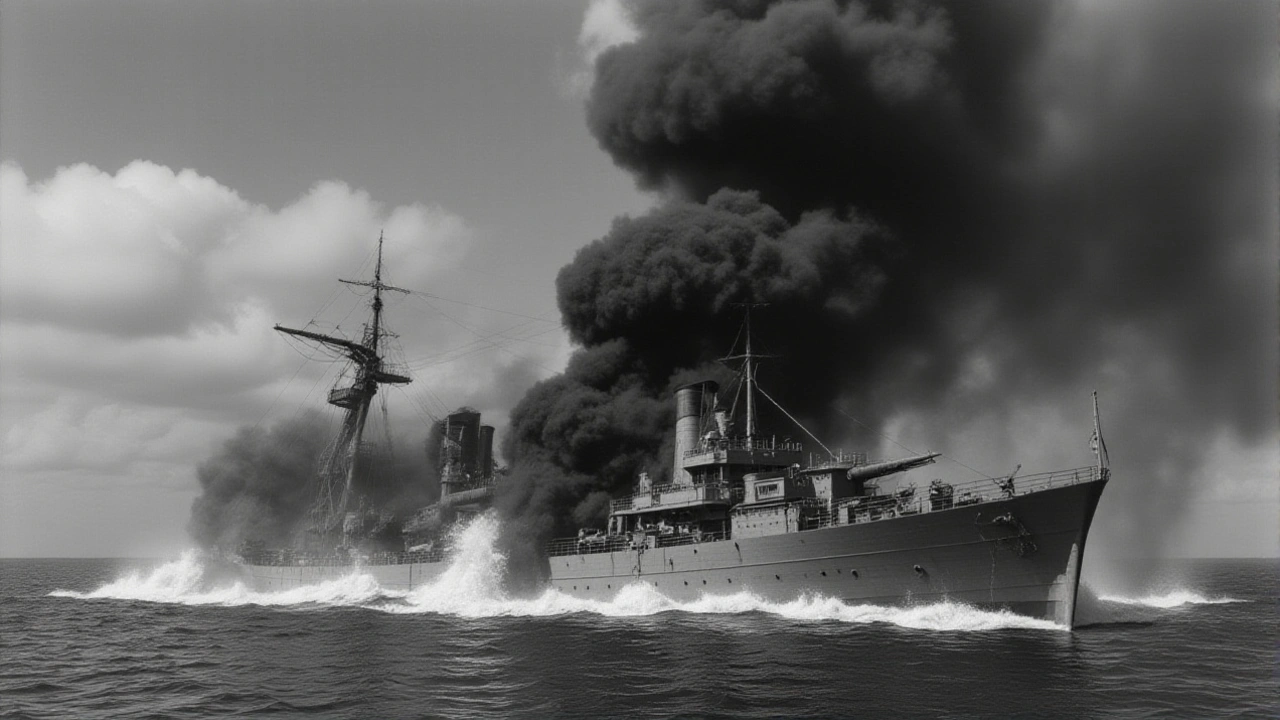
At exactly 7:55 a.m. Hawaii Standard Time on December 7, 2025, a hush fell over the Pearl Harbor waterfront. No survivors stood among the crowd. No trembling hands placed a wreath on the USS Arizona Memorial. For the first time in over eight decades, the annual remembrance ceremony honoring the Pearl Harbor attack unfolded without a single living witness — not one of the 12 remaining survivors, all over 100 years old, could make the journey. The silence wasn’t just symbolic. It was a generational threshold crossed.
The Last Witnesses Are Gone
Kimberlee Heinrichs stood quietly near the water, clutching her father’s old Navy cap. Her 105-year-old father, Ira "Ike" Schab, had planned to attend — again — until illness forced him to stay home in Oregon. "The idea of not having a survivor there for the first time — I just, I don’t know — it hurt my heart in a way I can’t describe," she said. That sentiment echoed through the crowd. Veterans’ organizations, historians, and active-duty service members all acknowledged the same quiet truth: we are now custodians of memory, not witnesses to it.
By 2025, the National Park Service confirmed only 12 survivors remained alive. None had traveled to Hawaii since 2023. The last to speak publicly at the ceremony was 102-year-old Harry Chandler, a Navy hospital corpsman who saw the USS Arizona explode and heard sailors tap on the hull of the capsized USS Oklahoma — a sound, he said, that still haunts him. He’s now retired in California, frail but lucid. His stories are being recorded for the National WWII Museum in New Orleans, where archivists are digitizing every last audio, letter, and photograph before the final voices fade.
How the Ceremony Changed
For years, survivors led the wreath-laying. Now, it’s the young. Sailors from the U.S. Navy in crisp whites stepped forward, their hands steady as they released crimson blooms into the harbor. Fighter jets screamed overhead in the missing man formation, one plane peeling away as if leaving a fallen comrade behind. The same ritual, now carried by a generation that never knew war on American soil.
David Ono, the event’s master of ceremonies, spoke plainly: "With this commemoration we recognize the importance of remembering the moment in the past when the prospects for peace were shattered and our nation was plunged into global war." His words weren’t flowery. They were necessary. Because without survivors to tell their stories in real time, the ceremony must now do the heavy lifting of keeping history alive.
The Attack That Changed Everything
On December 7, 1941, 414 Japanese planes launched from six aircraft carriers, crossing 230 miles of open ocean in near-total radio silence. At 7:53 a.m., Captain Mitsuo Fuchida signaled "Tora! Tora! Tora!" — Japanese for "Tiger! Tiger! Tiger!" — confirming the element of surprise. By 9:45 a.m., two battleships were sunk, 188 aircraft destroyed, and 2,403 Americans dead. The USS Arizona alone lost 1,177 men — more than half the total fatalities. The USS Oklahoma rolled over, trapping 429 sailors beneath its hull. Some tapped for hours.
Despite intercepted Japanese messages and radar blips detected by Oahu operators, warnings never reached Pearl Harbor in time. The U.S. Pacific Fleet was caught unprepared. By the next day, President Franklin D. Roosevelt stood before Congress and called it "a date which will live in infamy." Within days, the U.S. declared war on Japan. Germany and Italy, bound by treaty, declared war on the United States on December 11, 1941 — pulling America fully into World War II.
Why This Matters Now
The National WWII Museum estimates that by 2030, fewer than 500 living Americans will have served in World War II. For Pearl Harbor, the transition from living memory to historical record is already complete. Schools now teach the attack using VR recreations, survivor testimonies in digital archives, and even AI-generated voice simulations based on last interviews.
"We’re not losing a ceremony," said Dr. Eleanor Ruiz, a military historian at the University of Hawaii. "We’re losing the living bridge between past and present. The next generation won’t just read about the tapping on the hull — they’ll hear it in a headset, but they won’t feel the weight of knowing someone who was there. That changes how we grieve. How we remember. How we understand sacrifice."
What Comes Next
By 2026, the U.S. Navy plans to launch a national digital memorial — an interactive timeline accessible from classrooms and veterans’ centers, featuring synchronized audio of survivor voices with archival footage. The National Park Service is also training high school students as "Memory Ambassadors," teaching them to lead guided tours of the Pearl Harbor site using firsthand accounts.
And every December 7, at 7:55 a.m., the bells will toll. The jets will fly. The wreaths will be laid. And the silence — that long, heavy silence — will speak louder than ever before.
Frequently Asked Questions
Why can’t the last Pearl Harbor survivors attend the ceremony anymore?
Of the 12 remaining survivors, all are over 100 years old and face serious health challenges. Traveling from their homes across the U.S. to Hawaii is physically impossible for most. Several, like 105-year-old Ira "Ike" Schab, canceled plans in 2025 due to illness. Even if they could travel, the emotional toll of reliving the trauma is often too great. Their absence marks a profound shift — the end of direct human connection to the event.
How many people died in the Pearl Harbor attack, and who were they?
Official U.S. Department of Defense records list 2,403 Americans killed and 1,178 wounded. The majority were Navy personnel, with 1,177 lost aboard the USS Arizona alone. Others died on the USS Oklahoma, which capsized with 429 sailors trapped inside. Civilians, Marines, and Army Air Forces members were also among the dead. Most were young — many in their teens or early 20s.
What role did intelligence failures play in the attack?
Yes. U.S. cryptanalysts had broken Japanese codes and intercepted messages indicating an imminent attack. Radar operators on Oahu detected the incoming Japanese planes but were told to ignore them, assuming they were U.S. B-17s arriving from the mainland. Communications delays and bureaucratic missteps prevented warnings from reaching Pearl Harbor’s command. The failure wasn’t negligence — it was a tragic chain of assumptions that cost thousands of lives.
How is the legacy of Pearl Harbor being preserved today?
Archives at the National WWII Museum and National Park Service are digitizing survivor testimonies, audio logs, and photographs. Schools are using VR simulations and AI voice models to recreate first-person accounts. High school students are being trained as "Memory Ambassadors" to lead tours. By 2026, a national digital memorial will launch, ensuring future generations can experience the event not just as history — but as something deeply human.
Why was December 7 made a National Day of Remembrance?
Congress passed Public Law 103-308 in 1986 to formally designate December 7 as National Pearl Harbor Remembrance Day. The goal was to ensure the sacrifice of those who died wouldn’t be forgotten as veterans passed away. Unlike holidays like Memorial Day, it’s not a federal holiday — but it’s observed with ceremonies, flags at half-staff, and moments of silence. It’s a day to remember not just the attack, but the courage of those who responded.
What’s the significance of the "missing man formation" flyover?
The formation — typically four jets flying in tight formation, with one breaking away sharply — symbolizes a fallen comrade. The missing plane represents those who didn’t return. It’s a tradition dating back to World War I, now used at military funerals and memorials. At Pearl Harbor, it’s especially poignant: each jet represents not just one life lost, but the thousands who vanished in a single morning. The empty space in the sky is louder than any speech.


Jason Davis
just stood there at the memorial this morning. no survivors. just the wind, the bells, and the jets. i kept thinking about my grandpa’s old navy cap he never took off after the war. he never talked about it much, but i know he saw it all. now it’s our job to keep it alive, not just as history, but as feeling.