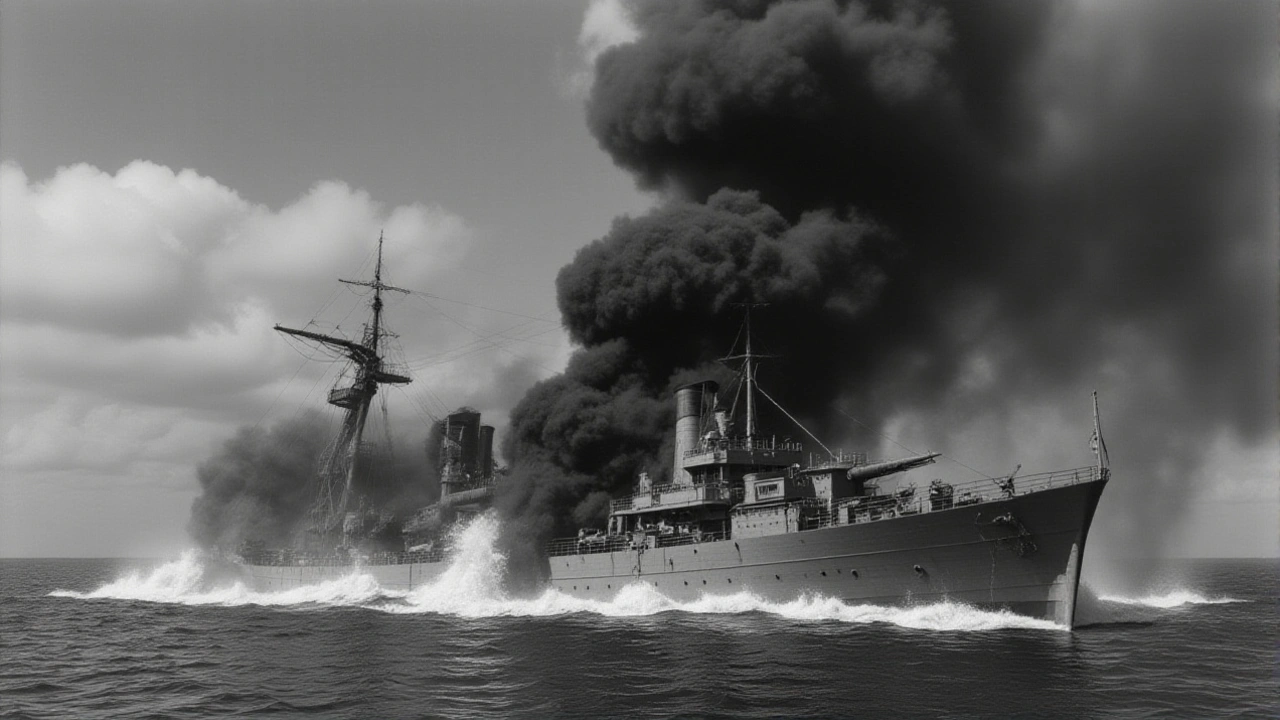
Pearl Harbor Attack: What Happened and Why It Changed Everything
On Pearl Harbor attack, the surprise military strike by the Imperial Japanese Navy on the United States naval base at Pearl Harbor, Hawaii, on December 7, 1941. Also known as the attack on Pearl Harbor, it wasn’t just a military blow—it was the moment the world changed overnight. The U.S. wasn’t at war yet. But after that morning, there was no turning back.
The Japanese targeted the Pacific Fleet because they knew if they crippled American ships, they could move freely across the Pacific without interference. They flew over 350 planes in two waves, hitting battleships, airfields, and fuel depots. Eight U.S. battleships were damaged, four of them sunk. Over 2,400 Americans died. The next day, President Franklin D. Roosevelt called it "a date which will live in infamy." Congress declared war on Japan within hours.
What most people don’t realize is that the attack didn’t just bring the U.S. into World War II, the global conflict that involved over 100 million people from more than 30 countries between 1939 and 1945. Also known as the Second World War, it was the deadliest war in human history.. It also ended decades of American isolationism. The country went from debating whether to get involved to building the largest military machine the world had ever seen. Factories switched from cars to tanks. Women took jobs in shipyards. Rationing became normal. The war effort reshaped society from the ground up.
The Japanese military, the armed forces of the Empire of Japan during the early 20th century, known for its aggressive expansion in Asia and the Pacific. Also known as Imperial Japanese Armed Forces, it was a highly disciplined force that had already taken parts of China and Southeast Asia before Pearl Harbor. thought they’d knock the U.S. out of the war before it even started. They didn’t count on American resilience. The carriers that were supposed to be at Pearl Harbor that day? They were out at sea. The repair yards and fuel tanks? Left untouched. Those mistakes meant the U.S. could bounce back faster than Japan expected.
And then there’s the December 7 1941, the exact date of the surprise attack on Pearl Harbor, marking the day the United States officially entered World War II. Also known as the day the U.S. went to war, it’s remembered not just for the destruction, but for the unity it created. People who had been divided over politics, race, or class suddenly stood together. The attack didn’t just change foreign policy—it changed American identity.
What you’ll find here aren’t just headlines from 1941. These are stories that connect the dots: the decisions made in Tokyo, the confusion on the ground in Hawaii, the speeches that rallied a nation, and the long-term consequences that still echo today. From military strategy to personal accounts, this collection pulls together the real moments that turned a surprise raid into a turning point in history.
On the 84th anniversary of the Pearl Harbor attack, the 2025 ceremony marked a historic first: no survivors attended. With only 12 centenarians still alive, the U.S. Navy and National Park Service now rely on digital archives to preserve memory.